
 Spanish
 Portuguese
 Arabic (Saudi Arabia)
 Chinese (Mandarin)
 Urdu (پاکستان)


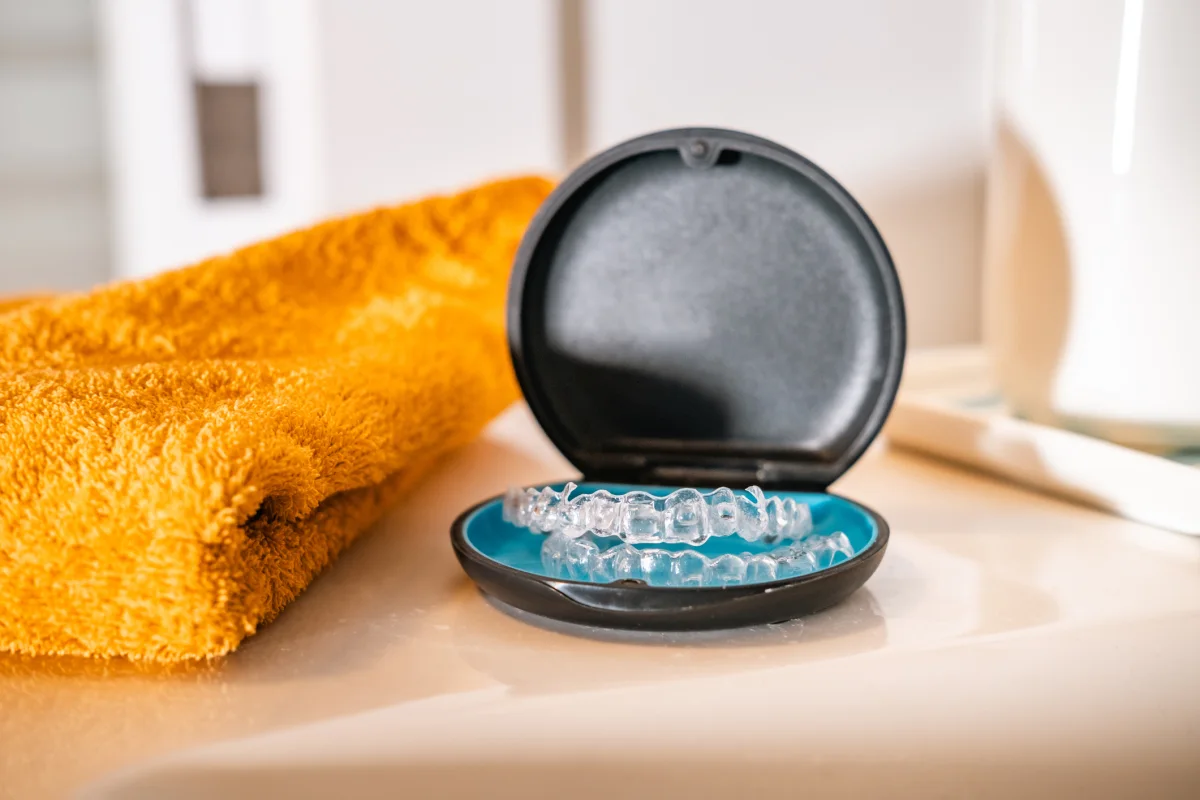
Complex orthodontic treatment is not about choosing a brand. It is about biomechanics, biology and specialist planning. Fixed braces and Invisalign® both have the range to treat demanding tooth movements when they are planned and supervised by a Specialist Orthodontist. This guide explains how clinicians define complexity, when each system is preferable, and how Orchard Orthodontics, led by Specialist Orthodontist Dr Sadiq, manages advanced cases with digital planning, auxiliaries and Dental Monitoring to deliver stable results.
What makes a case complex?
Complexity is defined by the movements required, the bite, and the foundation they act upon. Typical features include:
- Moderate to severe crowding or spacing, especially with root divergence
- Significant overbite or open bite, a deep curve of Spee, or an underlying skeletal discrepancy
- Crossbites with transverse asymmetry or narrow arches
- Impacted or ectopic teeth, missing teeth, or tooth size discrepancies
- Midline shifts, rotations greater than 30 degrees, and torque control needs
- Periodontal considerations, previous orthodontics with relapse, or restorative plans that rely on precise tooth positioning
Assessment involves a full specialist workup: medical and dental history, clinical photos, digital scans, X-rays, and cephalometric or 3D analysis where indicated. The plan is built around tooth movement in three dimensions, root position, occlusal goals, soft tissue profile, airway and function — not just the visible alignment.
How the biomechanics differ
Fixed braces: brackets and archwires deliver continuous forces with full-time control of tip, torque and rotation. Wires can be customised, bends added, and mechanics layered in the same visit. Force delivery is independent of patient wear.
Aligners: a series of calibrated trays stages movement incrementally. Precision relies on wear time, attachment design, material properties and auxiliary aids such as elastics. Force vectors are programmed digitally and reviewed against the biological response.
In practice, both systems can achieve complex correction when the plan anticipates biomechanics, anchorage and patient behaviour.
When fixed braces have an advantage
Fixed appliances are often preferred when movements demand constant control and robust anchorage, for example:
- Significant root torque or de-rotation of severely rotated teeth
- Rapid arch coordination and transverse correction with auxiliary expanders
- Complex vertical control in deep bites, where bite turbos and wire sequencing help intrusion predictably
- Managing impacted teeth with traction
- Severe crowding, where staged extractions and archwire progressions simplify the force systems
- Limited compliance, or difficulty wearing elastics and aligners for 22 hours per day
Ceramic and self-ligating options, including Damon self-ligating braces, provide the same mechanics with different aesthetics and friction profiles.
When Invisalign® can treat complex cases reliably
Clear aligners can address complex problems when designed and executed with the right protocol. Predictability improves with:
- A thoughtful attachment strategy to create purchase for torque, rotation and root control
- Optimised staging, including slower rates for intrusion, extrusion and de-rotation
- Planned Interproximal Reduction (IPR) to manage contacts and black triangles
- Elastics for Class II or Class III correction and to stabilise vertical changes
- Bite ramps or precision cuts to guide mandibular posture and open the bite
- Mid-course corrections and refinements based on objective tracking
- Close monitoring of tracking via remote tools, so any minor loss of fit is corrected early
The core principle is the same whichever system is used: design the biomechanics around the biology, then verify outcomes against the plan at regular intervals. You can read more on our Invisalign® treatment page.
Specialist planning vs general dental care
Appliances are only as effective as the plan behind them. A Specialist Orthodontist brings:
- Advanced training in diagnosis and biomechanics, including the management of growth, root position and occlusion
- Competence with both fixed and aligner systems, so recommendations are appliance-neutral
- Anticipation of side effects and anchorage needs, with contingencies ready before problems emerge
- Integration with hygiene, restorative and cosmetic goals, so edges, proportions and bite contacts finish in harmony
- Evidence-based refinement pathways and retention protocols for long-term stability
This level of planning typically changes outcomes by improving predictability, reducing avoidable refinements and protecting periodontal health.
Pros and cons in complex cases
Fixed braces
- Pros: continuous forces, strong torque and rotation control, less dependence on compliance, versatile auxiliaries, and efficiency for impacted teeth and severe crowding.
- Cons: more visible, potential soft tissue irritation, more frequent in-clinic adjustments, and higher hygiene demands around brackets and wires.
Invisalign®
- Pros: discreet, removable for eating and brushing, fewer emergencies from breakages, digital planning and simulation, and remote monitoring potential.
- Cons: success depends on wear time, certain movements may require more stages or refinements, attachments add visibility, and some biomechanics need auxiliaries to match fixed appliance control.
How Orchard Orthodontics manages complexity
Planning is specialist-led. Digital scans and 3D simulations set targets for tooth and root position, not just cosmetic alignment. The team sequences the biomechanics for each phase, whether using Damon self-ligating braces, ceramic options, or aligners.
Biomechanics and auxiliaries: torque control with wire progression and bends for braces; optimised attachments, IPR, bite ramps, elastics and staged movements for aligners. Impacted teeth are addressed with surgical coordination and traction.
Dental Monitoring: eligible patients use remote scans between visits. The team tracks fit, hygiene and attachment integrity, adjusting sooner if movement drifts. This can reduce unnecessary chair time while maintaining close oversight — without replacing clinician judgement. You can read more about AI-powered Dental Monitoring.
Refinements: in aligner care, refinements are a normal part of the process. Updated scans and revised staging tighten precision without restarting the journey. Fixed appliances may also use finishing bends or a short detailing phase.
Hygiene and support: maintaining gum health around braces and attachments protects the biology, which in turn supports predictable movement.
Retention and aftercare: bonded retainers, removable retainers and 12 months’ aftercare are included in Orchard’s all-inclusive quotes. Retention is planned early, with fixed or removable strategies tailored to the risk of relapse and the patient’s lifestyle.
Clarifying common misconceptions
Myth: aligners cannot treat deep bites, open bites or rotations.
Reality: they can, with the correct attachments, bite ramps, elastics and careful staging, though refinements are often part of the journey.
Myth: braces are always faster.
Reality: speed depends on biology, compliance and plan design. Both systems can be efficient in the right hands.
Myth: the appliance choice determines success.
Reality: specialist diagnosis and biomechanics determine success; the appliance is a tool.
Frequently asked questions
What defines a complex case and how is it assessed?
Complexity involves difficult tooth movements, bite discrepancies, skeletal factors, impacted teeth or periodontal limits. It is assessed with a specialist exam, digital scans and radiographs, then planned in 3D.
When are fixed braces preferable?
When constant force, robust torque, severe rotations, impacted teeth or limited compliance are present, fixed appliances usually offer more direct control.
Can Invisalign® reliably treat complex cases?
Yes — with specialist planning, the correct attachments, elastics, bite ramps, deliberate staging and timely refinements, monitored closely for tracking.
How does specialist planning change outcomes?
It aligns the biomechanics with the biology, anticipates side effects, integrates auxiliaries and sequences treatment for stability, typically improving predictability and finish quality.
How does Orchard manage complex cases day to day?
Through digital planning, auxiliaries, Dental Monitoring, expected refinements and structured retention, all under Specialist Orthodontist oversight.
Choosing your route
If you value a discreet appliance and can commit to the wear time, aligners may be appropriate even for complex movements. If you prefer a hands-off appliance that delivers constant control, fixed braces may suit you better. In both scenarios, specialist planning is the decisive factor.
To explore the right plan with a Specialist Orthodontist in South London or Surrey, you can view Orchard Orthodontics’ locations and services. Patients in South London can also find local details for our Brixton clinic. When you are ready to speak with the team, book a free consultation to review your options, timelines and inclusive pricing.
Back 8 Brixton Hill Brixton


 Open in Google Maps