
 Spanish
 Portuguese
 Arabic (Saudi Arabia)
 Chinese (Mandarin)
 Urdu (پاکستان)


From fitness trackers that count our steps, to watches that monitor our sleep, technology has become increasingly involved in helping us look after ourselves. Now, AI is making its way into something we do every day: brushing our teeth.
Dyson’s latest invention, the Dyson CameraJet Electric Toothbrush, is a fascinating example. The new AI-powered toothbrush uses camera technology and intelligent feedback to help users identify areas they may be missing when they brush.
Dyson isn’t alone. Philips has also entered the AI toothbrush space, with its latest Sonicare using AI-powered technology to provide real-time feedback on brushing.
The new innovations in dentistry are undeniably clever. Dyson’s CameraJet uses a small camera and AI to identify gaps between the teeth as you brush, with the system able to direct a targeted jet of mouthwash towards those areas. The camera processes 28 images a second, using machine learning trained on hundreds of thousands of dental images.1
Philips is taking a slightly different approach, with its latest Sonicare using on-device AI to track where you have brushed and provide real-time feedback on coverage and pressure.2
It is a fascinating glimpse of where everyday healthcare is heading: technology that can observe what we are doing and give us immediate feedback. However, it also raises a slightly bigger question — are we becoming so reliant on technology that we are forgetting the basics?
When it comes to oral health, the answer should be a little reassuring. We don’t necessarily need technology to tell us that brushing our teeth twice a day is important. We don’t need an algorithm to remind us that cleaning between our teeth matters, and we certainly don’t need the most expensive toothbrush on the market to maintain good oral hygiene. In fact, the bathroom may be one place where we shouldn’t need AI at all. What we do need is consistency.
I generally recommend an electric toothbrush over a manual toothbrush because it can make brushing easier. When used correctly, it can be more effective, without spending hundreds of pounds on a toothbrush. A good mid-range electric toothbrush costing somewhere around £20–£50 can do an excellent job.
The Cochrane systematic review looked at powered versus manual toothbrushes and found that powered toothbrushes produced a statistically significant reduction in plaque and gingivitis compared with manual brushing, although the effects were relatively modest.3
The bigger issue is whether we are actually using our toothbrush properly and regularly. The 2021 Adult Oral Health Survey found that 18% of adults in England only visited the dentist when they had trouble with their mouth, teeth or dentures.
Where AI can make a difference
Rather than replacing good dental habits, technology has the potential to reinforce them. If an intelligent toothbrush can highlight areas we regularly miss, improve our technique or make us more aware of how we brush, that could encourage better habits.
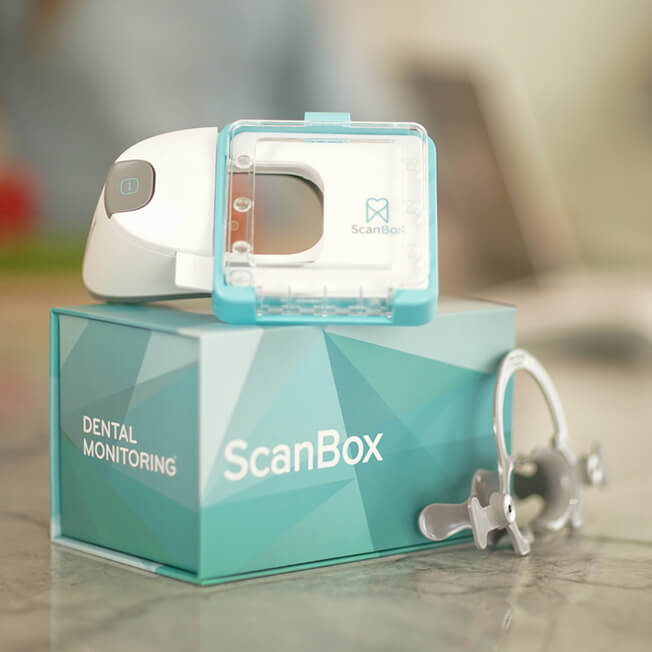
We are already seeing this wider shift within dentistry. At Orchard Orthodontics, AI is already being used to monitor orthodontic treatment remotely through the help of ScanBox, helping the team track progress between appointments and identify when a patient may need attention. This isn’t just an innovative idea for the future. A recent 2026 study published in Scientific Reports found that an AI-powered orthodontic monitoring system was highly accurate at detecting issues such as bracket breakages, open clips and lost ties.4
The exciting part is not that technology is taking over dental care, but that it can give patients and clinicians more information to make better-informed decisions.
There are limits to what a smart toothbrush or app can tell us. AI can analyse data and spot patterns, but it cannot replace the understanding that comes from knowing your dental history, individual needs and lifestyle habits. As the British Dental Association highlights, routine dental check-ups can also pick up signs of conditions such as oral cancer.5 So, although technology can support good oral health, it cannot replace good habits, professional advice or seeing a qualified clinician who can put all of that into context and give advice tailored to you.
So, should we embrace AI in dental care? Absolutely. Should we expect it to do all the work for us? Probably not. The future of dentistry is likely to be a combination of increasingly clever technology and something much less futuristic: people taking responsibility for their own health.
AI can tell us where we are missing. Our dentist can tell us what we need. But ultimately, we still have to pick up the toothbrush.
References
- Dyson. Introducing CameraJet. Available at: dyson.co.uk/discover/news/latest/introducing-camerajet (accessed 8 September 2026).
- Philips. Philips Sonicare sets new benchmark in oral healthcare with the brand’s first electric toothbrush powered by on-device AI. Available at: philips.com (accessed 8 September 2026).
- Yaacob M, Worthington HV, Deacon SA, Deery C, Walmsley AD, Robinson PG, Glenny A-M. Powered versus manual toothbrushing for oral health. Cochrane Database of Systematic Reviews 2014, Issue 6. Art. No.: CD002281. Available at: cochrane.org (accessed 8 September 2026).
- McCray JF, Smith L, Handlin D, et al. Accuracy of DentalMonitoring’s artificial intelligence in detecting common orthodontic braces treatment-related emergencies. Sci Rep 16, 6627 (2026). Available at: doi.org/10.1038/s41598-026-37329-w (accessed 8 September 2026).
- British Dental Association. Oral cancer: access problems will cost lives. Available at: bda.org (accessed 8 September 2026).
 8 Brixton Hill Brixton


 Open in Google Maps