
 Spanish
 Portuguese
 Arabic (Saudi Arabia)
 Chinese (Mandarin)
 Urdu (پاکستان)



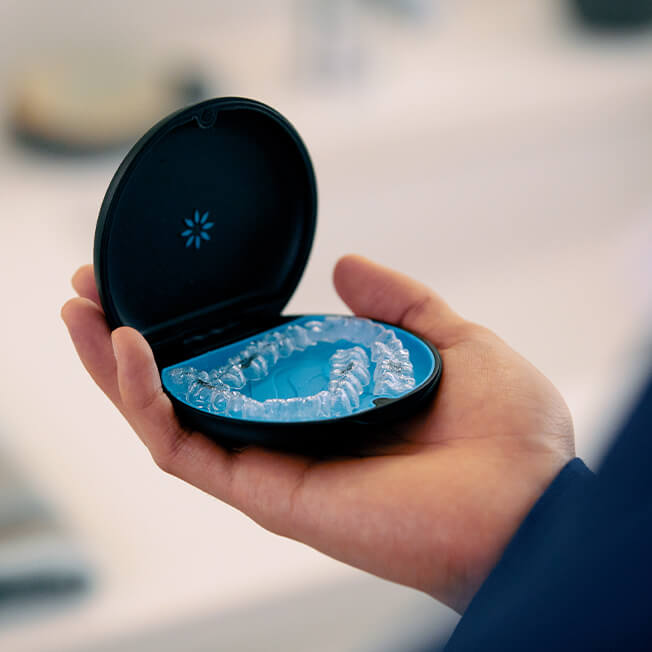
If you have been researching clear aligners recently, you may have seen headlines about a VAT ruling and wondered what it means for the cost of your treatment. Here is a plain English explanation of what changed, why it happened, and what it does (and does not) mean for anyone considering Invisalign®.
What actually changed?
In July 2026, the Upper Tribunal (Tax and Chancery Chamber) ruled in HM Revenue and Customs v Align Technology Switzerland GmbH [2026] UKUT 00256 (TCC) that clear aligners do not qualify as “dental prostheses” for VAT purposes.
That sounds technical, so here is why it matters. Under the Value Added Tax Act 1994, certain dental appliances are exempt from VAT. Clear aligners had previously been treated as falling inside that exemption. The Tribunal decided they do not, which means they are standard rated at 20%.
Importantly, this is a change in how the appliance is taxed. It is not a change to how dental care itself is taxed.
Why aligners are treated differently from crowns and dentures
The distinction the Tribunal drew comes down to what the appliance is actually doing.
A crown, a bridge or a denture replaces something that is missing or damaged. It stands in for a tooth. That is what the legislation had in mind when it created an exemption for dental prostheses, and those items may still qualify.
A clear aligner does something quite different. It does not replace a tooth. It moves teeth that are already there. The Tribunal took the view that an appliance which repositions natural teeth is not a prosthesis in the sense the exemption intends, however sophisticated the appliance may be.
Whatever you make of the reasoning, that is now the position, and every orthodontic practice in the UK is working through what it means.
Does this mean Invisalign is now 20% more expensive?
Not automatically, and this is where a lot of the online commentary gets it wrong.
Two things are worth separating out.
Dental treatment provided by a registered professional remains VAT exempt. Where the principal purpose of treatment is the protection, maintenance or restoration of a patient’s health, that care is still exempt. Orthodontic treatment planned and delivered by a specialist orthodontist is care, not a product sale.
The cost sits with the practice first, not the patient. The immediate effect of the ruling lands on the supply chain and on practice accounting. How, or whether, that filters through to patient fees depends entirely on the individual practice, its business model and its financial position.
What Dr Sadiq says about the wider picture
This is a subject our clinical director, Dr Kalim Sadiq, has written about for the profession. His article, VAT on clear aligners: will patients’ choices change?, was published in Dentistry in August 2026.
Drawing on more than twenty years in orthodontics, he sets the ruling in the context of the other pressures practices are under: rising laboratory costs, rising dental material costs, and higher staffing costs following increases to the national living wage. As he puts it, it is unlikely that every practice will be able to absorb these additional costs indefinitely.
His central point, though, is not about money. It is that affordability should never outweigh clinical suitability. That is worth sitting with, because it goes to the heart of what patients should actually be worrying about right now.
The real risk is not a price rise. It is the wrong treatment.
Here is the concern with a story like this one.
When the conversation becomes entirely about cost, patients start shopping on price. And when patients shop on price for orthodontics, they tend to end up in one of two places: with a cheaper appliance that was not the right choice for their case, or with a remote, mail order aligner service where nobody has examined their teeth, taken radiographs, or assessed the health of the bone and gums supporting them.
Clear aligners are an excellent treatment for a great many cases. They are not the right treatment for every case. Some bites need fixed appliances. Some need a Carriere Motion appliance first. Some need a combination, and some need treatment sequenced in a particular order to get a stable result that lasts.
Deciding that on the basis of which option carries the smaller VAT bill is the wrong way round. A treatment that is 15% cheaper and does not correct your bite is not a saving.
The question worth asking is not “which appliance costs least?” It is “which appliance is right for my case, and who is planning it?” You can read more on that in our guide to choosing your orthodontist.
What to do if you are thinking about starting treatment
A few practical suggestions.
- Ask what your quote includes. All inclusive is not a universal standard. Some quotes exclude retainers, refinements or review appointments, and those add up.
- Ask whether the fee is fixed for the duration of treatment. This matters more than usual at the moment.
- Get assessed before you get a price. A fee quoted before anyone has examined you is a guess.
- Check who is planning your treatment. A specialist orthodontist has completed three years of additional postgraduate training and is registered on the GDC specialist list. Not everyone offering aligners has done that.
- Do not rush a decision because of a headline. Orthodontic treatment lasts months or years. It is worth a fortnight of proper thought.
Frequently asked questions
Is Invisalign VAT exempt in the UK?
Following the Upper Tribunal’s July 2026 decision, clear aligners including Invisalign are not treated as VAT exempt dental prostheses and are standard rated at 20%. Dental treatment provided by a registered dental professional remains VAT exempt where its principal purpose is the protection, maintenance or restoration of health.
Will my Invisalign treatment cost more because of the VAT ruling?
Not necessarily. The ruling changes how the appliance is taxed, and how that affects patient fees is a decision for each individual practice.
Does the VAT ruling apply to fixed braces?
The decision concerned clear aligners specifically. Fixed appliances such as Damon braces were not the subject of this case. Orthodontic care delivered by a registered professional remains exempt on the same basis as before.
Are crowns, bridges and dentures still VAT exempt?
Those items may still qualify as dental prostheses, because they replace missing or damaged teeth. The Tribunal’s reasoning turned on the fact that aligners move existing teeth rather than replacing them.
Should I start treatment now to avoid a price increase?
You should start treatment when it is clinically right for you, not because of a tax deadline. If you are being pressured into signing quickly because of VAT, treat that as a warning sign rather than an offer.
If I have already started treatment, will my fee change?
This depends on the agreement you signed at the start of your treatment plan. If you are unsure what your plan covers, ask the practice to confirm before you go any further.
Ready to start your journey?
If the coverage has left you unsure where you stand, the simplest thing is to come and ask us in person. A consultation gives you a proper clinical assessment, a treatment plan built around your case rather than a brand, and a clear, all inclusive price with monthly payment options.
Book a free consultation or take a look at our pricing and Invisalign® pages.
This article is general information about a change in VAT treatment and is not tax advice. Practices and patients with specific questions should speak to a qualified adviser.
Back 8 Brixton Hill Brixton


 Open in Google Maps